



«Smart Cities: an initial assessment and new impetus for smarter, more sustainable local authorities
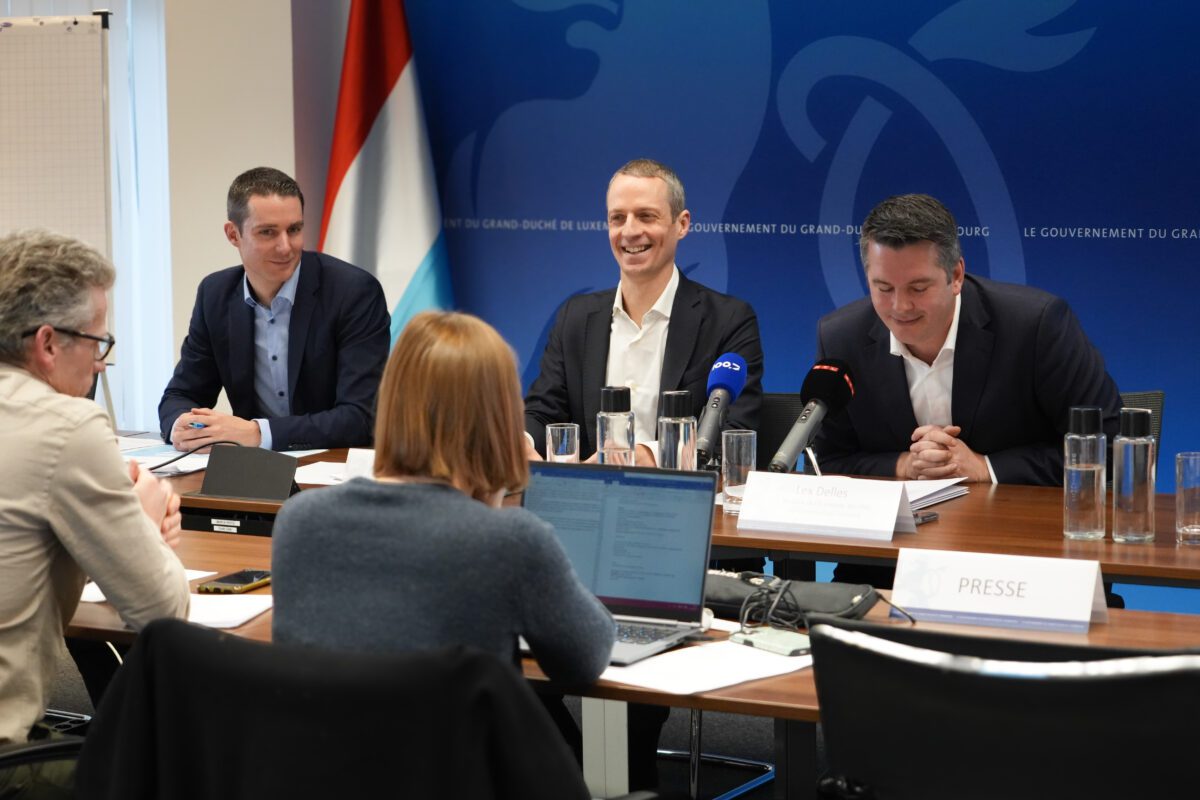
To support local authorities in their ecological and digital transition, the Minister for the Economy, SMEs, Energy and Tourism, Lex Delles, and the Minister for the Environment, Climate and Biodiversity, Serge Wilmes, gave an initial assessment of the first wave of the «Smart City» call for projects in the presence of the President of Syvicol, Emile Eicher.
Launched in 2025, this call for projects aims to encourage the development of innovative solutions in the fields of intelligent mobility, intelligent energy and intelligent resource management, thereby contributing to more rational use of resources and energy through digitisation, with financial support provided in particular by the Ministry of the Environment, Climate and Biodiversity through its various funds.
In total, out of 15 projects submitted, 5 were selected as part of the call: 3 in the field of mobility, 1 in the field of resources and 1 in the field of energy. 6 projects meeting the eligibility criteria were then presented to the Climate and Energy Fund, under the aegis of the French Ministry for the Environment, Climate and Biodiversity, on 21 January 2026, in order to confirm their funding through a results-based agreement.
4 projects which could not be subsidised by the Climate and Energy Fund, but which were deemed relevant, were passed on to the Environmental Protection Fund and the Water Management Fund. The two projects from the Environmental Protection Fund have also been approved, and the two projects from the Water Fund will be presented at the next session in March.
The projects were assessed on the basis of a number of criteria: the quality of the application, its relevance, innovation or novelty within the municipality, the social and environmental impact, the quality and ambition of the key performance indicators to be monitored over time, the «data» aspect including data generation, management, open data, sharing, cybersecurity and interoperability, the potential for replicability, and the sustainability, implementation and monitoring of the project. The pre-selection was carried out by a jury made up of representatives from the Ministry of the Economy, the Ministry of the Environment, Climate and Biodiversity, and Klima-Agence. The deliberations were documented and the opinions sent to the project sponsors.
The aim of this initial assessment, presented at the press conference, was to inspire local authorities and encourage them to submit their projects for the second wave of the call for projects currently underway, with a deadline for applications set for 15.03.2026.
The smart city is an essential pillar of our society's ecological transition, promoting more efficient management of resources and energy through practical, reproducible digital solutions. These calls for projects are part of the government's drive to enhance the sustainability of our regions while improving the quality of life of our citizens.
Minister Lex Delles emphasised: «Smart Cities represent the future. In Luxembourg, innovative solutions already exist and bear witness to the know-how and creativity of local authorities. I am convinced that this call for projects will offer local authorities new levers to accelerate their ecological transition. Intelligent digital solutions are not an end in themselves, but a formidable tool for managing our resources and energy more efficiently, sustainably and in the interests of quality of life throughout the country.»
Minister Serge Wilmes said: «Local authorities are key players in the ecological transition and must be able to rely on strong public support to make their ambitions a reality. Through the funding provided by the Ministry for the Environment, Climate and Biodiversity, we are making targeted investments in innovative Smart City projects that deliver tangible results for the climate, resources and quality of life for citizens. These projects, which are rooted in local realities and have a high potential for replication, are an essential lever for accelerating the ecological transition over the long term throughout the country.»