


Innovation and solidarity: Benelux joins forces to meet the challenges of water and climate change
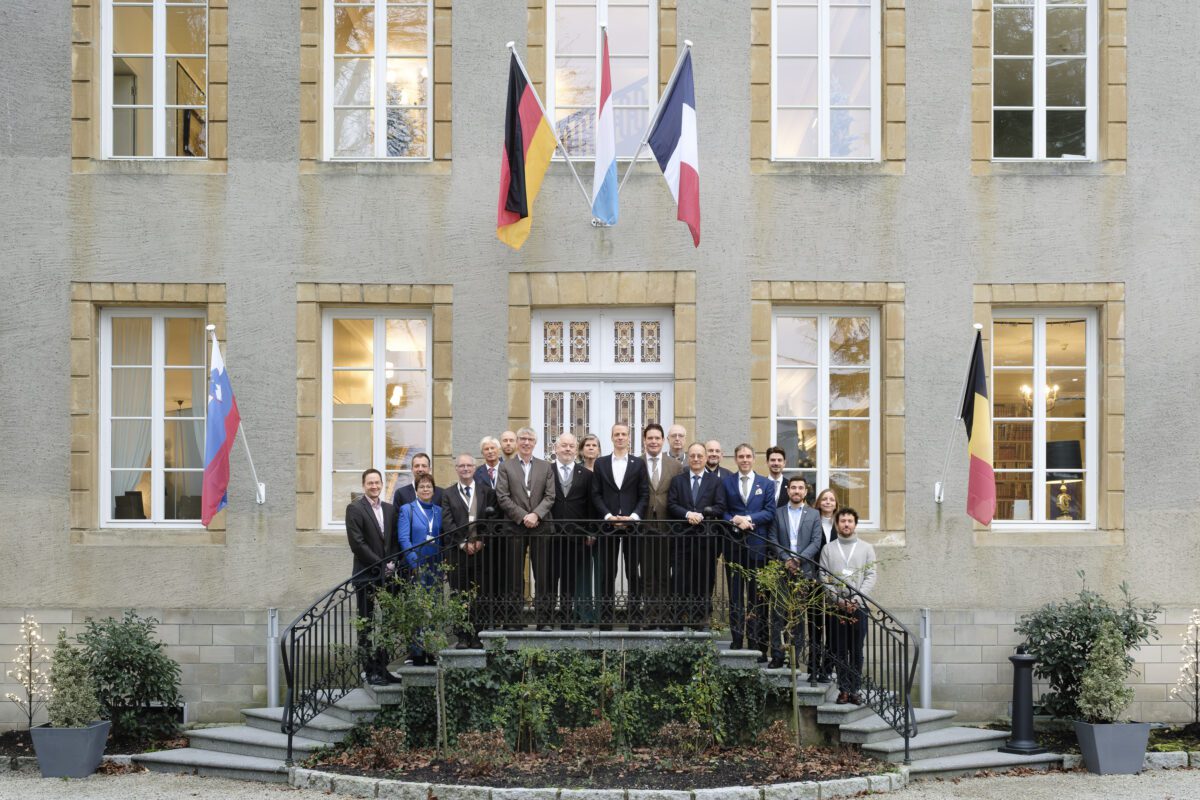
Organised by the Ministry of the Environment, Climate and Biodiversity in collaboration with the Benelux General Secretariat, the BENELUX+ conference on water was opened on 3 December 2025 in Schengen, Luxembourg, by the minister Serge Wilmes. It brought together 25 representatives from the Benelux countries and partner regions to strengthen cross-border cooperation on the challenges of water, flooding and climate change.
In his opening address, Minister Serge Wilmes stressed the importance of a cross-border approach: «Water issues know no borders. BENELUX+ cooperation is essential to strengthen our resilience to flooding, drought and the impacts of climate change. By pooling our efforts, we can build a more sustainable and resilient environment for future generations.»
Organised in collaboration with the Benelux General Secretariat, the conference addressed four key themes:
- Session I: A «Water Smart» economy»
Participants explored how to integrate the principles of the circular economy to optimise water use, reduce losses and promote reuse. This approach aims to improve water and energy efficiency, while creating new sustainable business models. The discussions highlighted innovative initiatives to reduce environmental impact and ensure optimal allocation of resources, particularly in the face of rising temperatures linked to climate change. - Session II: Preparedness, early warning and recovery
Discussions focused on strengthening warning systems and cooperation mechanisms to anticipate floods and limit damage. Concrete examples were presented, such as the measures put in place in Rhineland-Palatinate and the lessons learned in Wallonia from the floods in the Vesdre valley. The participants stressed the importance of rapid coordination to support the populations affected and restore infrastructures. - Lunchtime debate: artificial intelligence for water
The role of AI in water management was at the heart of the discussions. Far from being a threat, AI can optimise processes, improve forecasting and support decision-making through data analysis. Luxembourg presented a digital twin project applied to water management, illustrating the potential of advanced technologies to increase resilience. - Session III: BENELUX+ and EU cooperation
The conference confirmed the pioneering role of the Benelux as a laboratory for European policies on cross-border cooperation. Participants shared best practice, particularly in flood monitoring and forecasting in cross-border basins, with contributions from Flanders and Slovenia. These initiatives offer models that can be reproduced on a European scale.
By exchanging best practice from Luxembourg, Wallonia, Flanders, the Netherlands, Hauts-de-France, Rhineland-Palatinate, North Rhine-Westphalia and Slovenia, the conference signalled the desire to pursue joint efforts towards sustainable and resilient water management, based on innovation, research and regional solidarity.